
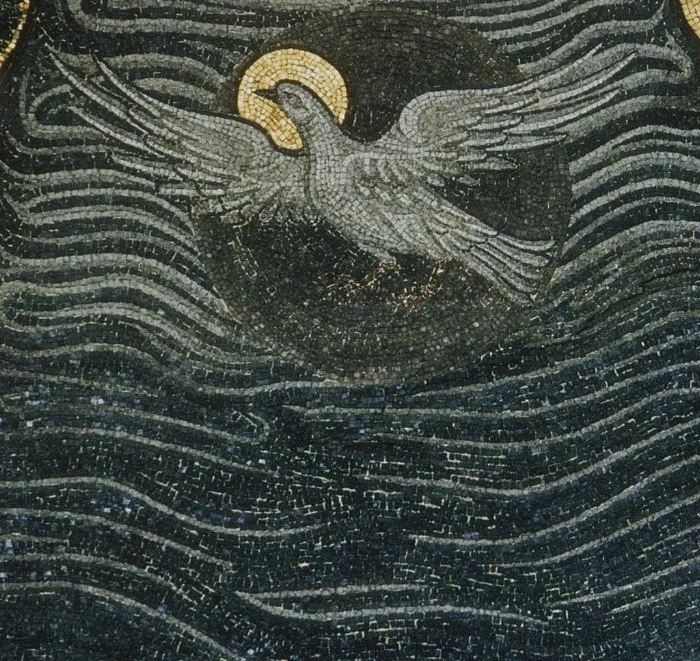
Word, Spirit, Sacrament
As a church rooted in the Anglican tradition, we believe that something significant happens when the People of God gather around the Word of God in presence of the Spirit of God. Some churches emphasize the power of God’s Spirit, some emphasize the preaching of God’s Word, and still others emphasize the priority of tradition and the liturgies that have been passed down to us. But it’s when these three streams are held together — Word, Spirit, and Sacrament — that we can receive all God wants to give us. No church is perfectly balanced, but we are a community who is continuing to lean into this threefold creative tension of the Anglican way.
Art: Arcabas
Belief and Posture
We hold to the historic Christian faith
as we seek to love God and our neighbors as ourselves in Christ.
Creeds
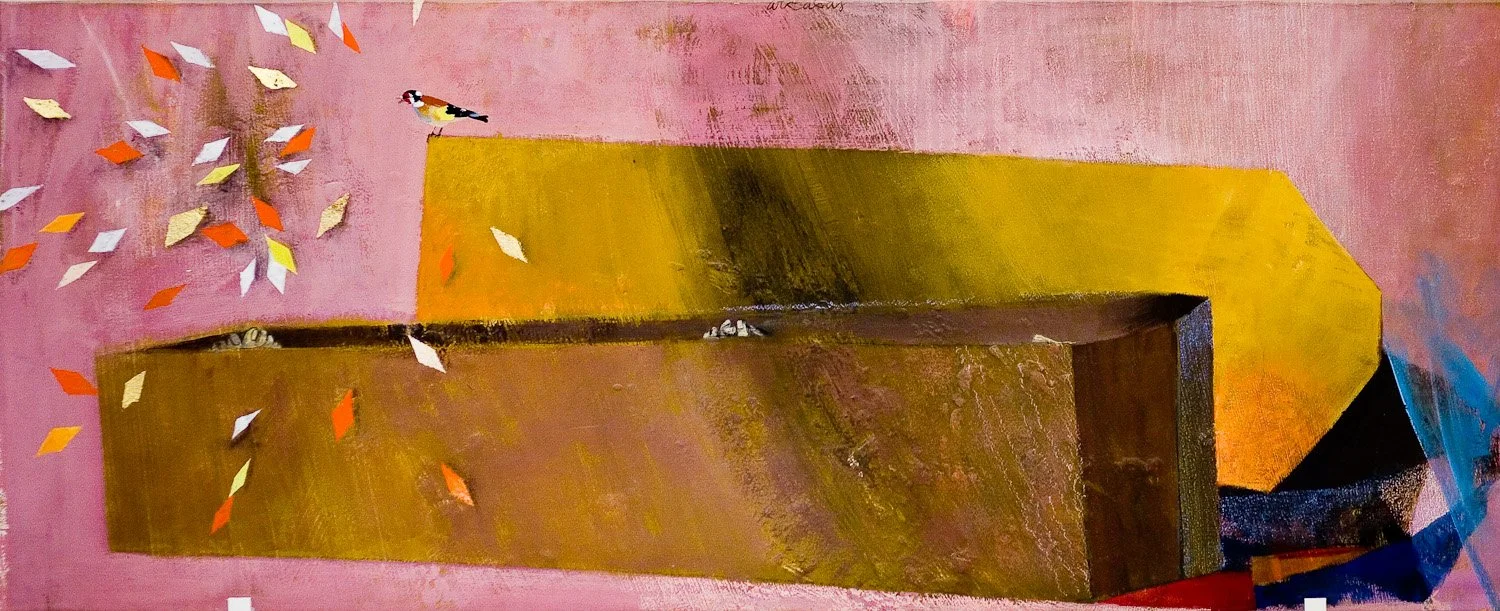
We desire to receive the faith taught by Christ, revealed in the Scriptures, handed down from the first apostles, and embraced by the church for 2,000 years. With Christians everywhere, we affirm our belief in historic Christianity as summarized in the two historic creeds: the Apostles' Creed and the Nicene Creed. These creeds summarize the Biblical witness to who God is and what he is doing, and serve as our framework for interpreting the Scriptures.
Confessions
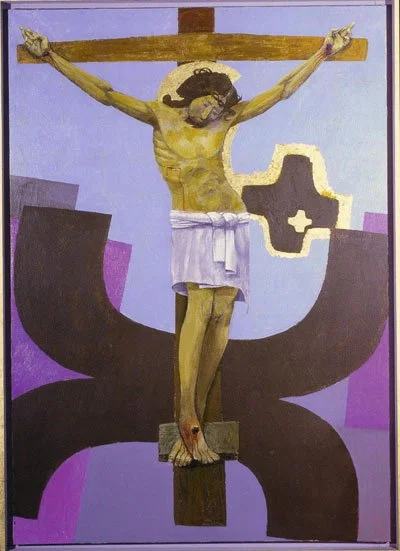
Scripture speaks clearly to more than just what's contained in the Creeds. To go deeper, we recommend the Jerusalem Declaration as an expression of the belief of our global Anglican family as well as the 39 Articles of Religion.
Conversations
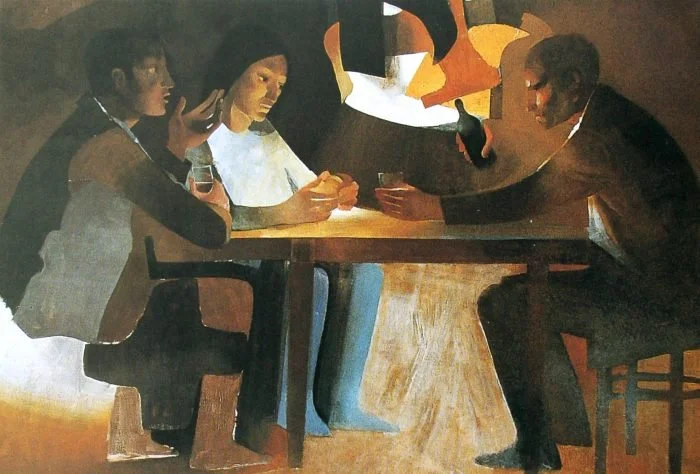
Sometimes, Scripture does not speak clearly to something we care deeply about. Examples might include political affiliation, scientific understandings of origins, the particularities of baptismal practice, and more. At Trinity, we seek to be "simply Christian," welcoming a diversity of opinion on unclear topics, and encouraging love and mutual understanding where secondary beliefs differ. We practice staying in the room with difference, seeking fruitful dialogue rooted in grace and truth.
Art in this section:
Arcabas
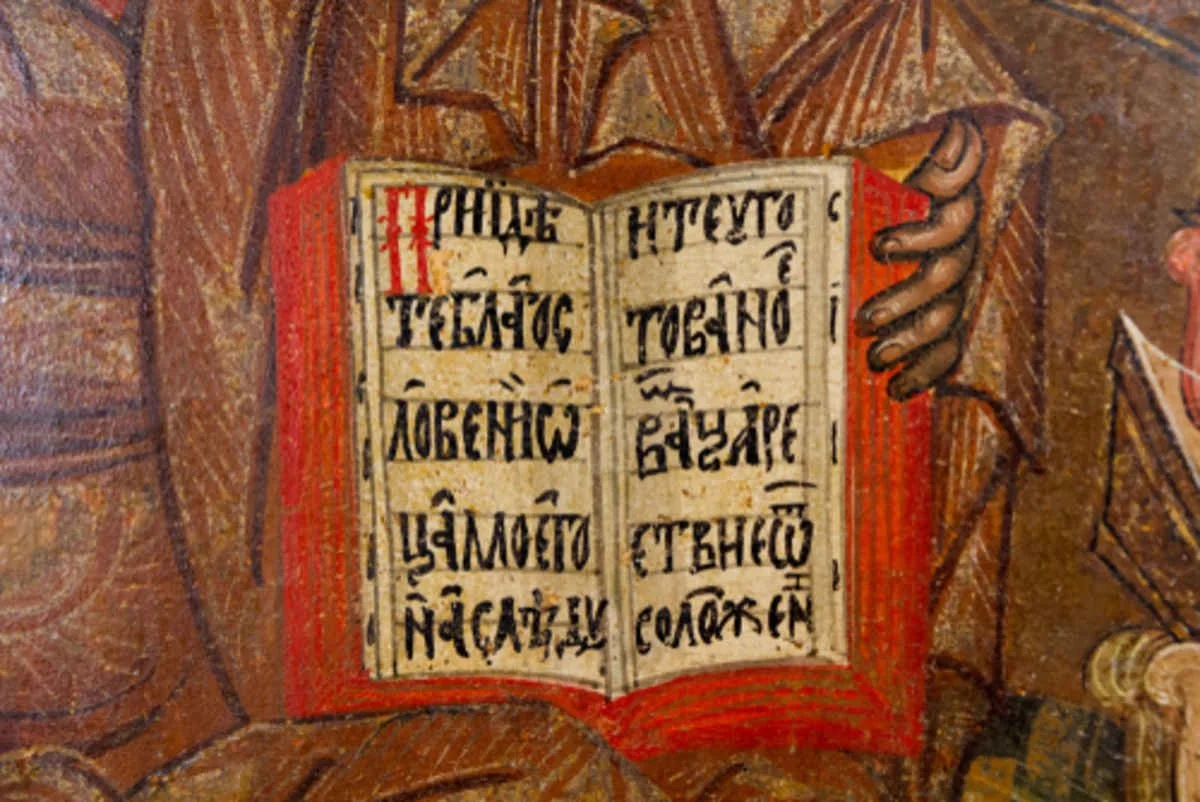
Russian Orthodox icon of Christ Pantocrator
Tradition
"Tradition is not the preservation of ashes but the preservation of fire." - Gustav Mahler
For 2000 years people have been living, reflecting, and walking out their Christian faith across the globe. Anglicans value that - we don't throw it away just because it comes from a different century or culture. (In fact, we find this keeps us from being blinded by our own culture!)
When it doesn't go against Scripture, Anglicans are glad for the help from past brothers and sisters and the deep wisdom they have left us. After all, "Tradition is not the preservation of ashes but the preservation of fire." (Gustav Mahler) So when we want to examine something, we don't just look for a verse in the Bible. We also wonder "how did people in the 6th century interpret this? - is there something that they saw that I can't see?" That's called good tradition.
It flows from that great cloud of witnesses who are cheering us on.
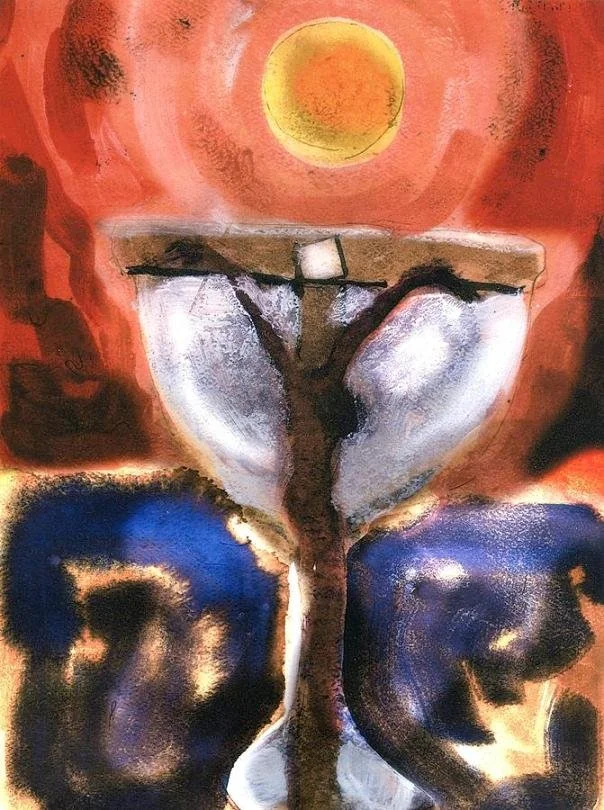
Eucharist, by Daniel Bonnell
Liturgy
We follow a pattern of prayers and scripted words. This is called our 'liturgy' which literally means the work of the people.
When we come to church, we stand, we sit, we kneel, we offer our whole selves and our whole bodies to God. This is our 'gospel aerobics' and it doesn't change much. Rest assured that no one is grading you on your participation. We are all students here - learning to live the liturgy takes a lifetime. At first, it might feel uncomfortable, like a new pair of shoes.
C. S. Lewis says that good church services shouldn't entertain us or change much - because then our focus becomes on the 'change' or on the novelty. Rather, a good church service, he says, "...works best when, through long familiarity, we don’t have to think about it. As long as you notice, and have to count the steps, you are not dancing but only learning to dance. A good shoe is a shoe you don’t notice. The perfect church service would be one we were almost unaware of; our attention would have been on God."
So in the liturgy, even if the words are 2000 years old, we are dancing.
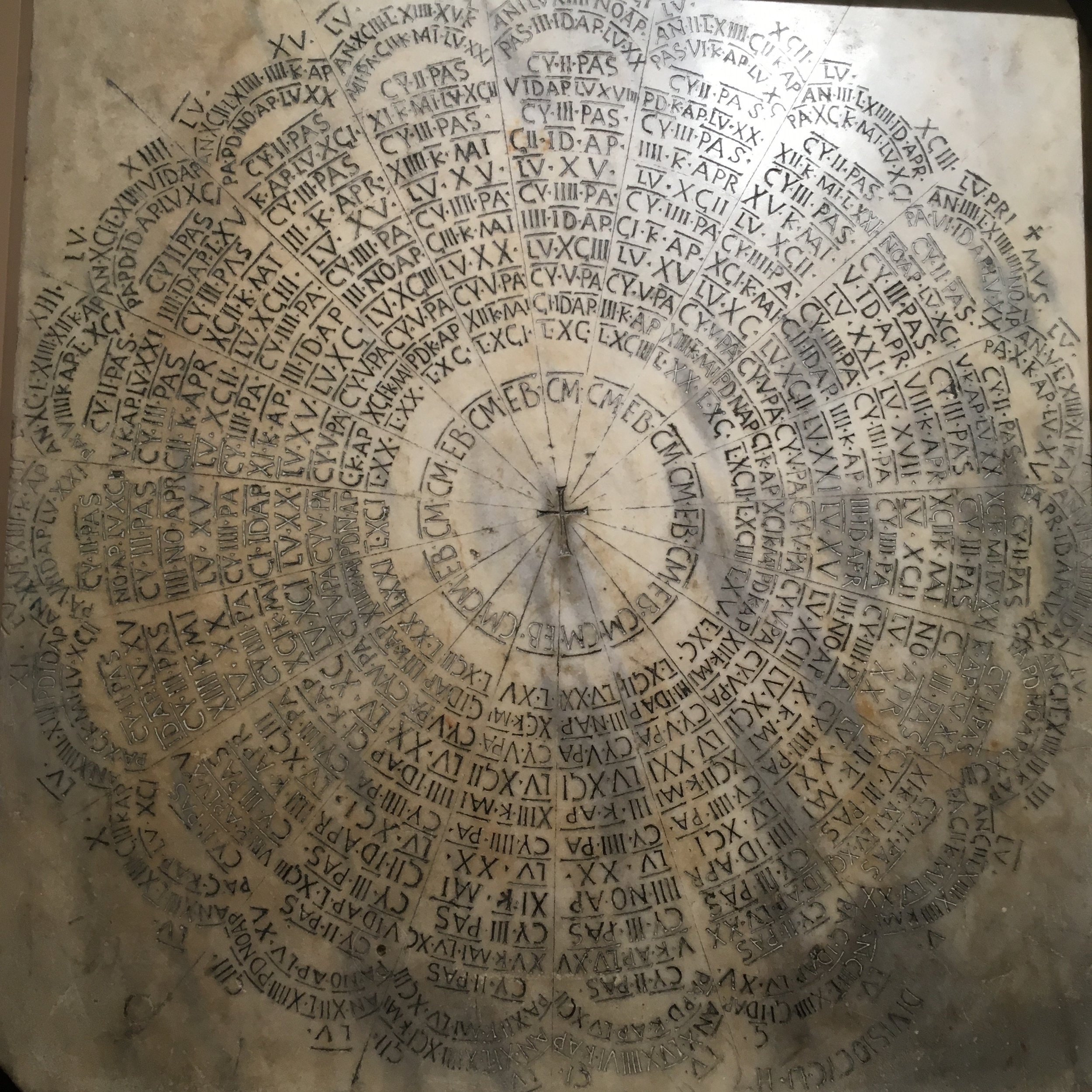
Easter cycle calendar on marble. Ravenna, Italy. 6th cent CE
Church Calendar
For those of us who live by children's academic calendar (or the football calendar), the "church calendar" seems strange. Why would we tell time differently? Is this in the Bible?
The Church Calendar beckons us to a new way of telling time that helps us live deeply into the Jesus story, year after year. It is not an "addition" to our salvation - it is walking out our salvation by participating in the events of Jesus' life that now, mysteriously, are becoming part of our own.
The Greeks had two words for time: chronos and kairos ...
Mosaic: Dome of Creation, St Mark’s Cathedral, Venice
Baptism
An Anglican's response to the question about infant baptism is the following: why wouldn't you baptize your children?
Baptizing babies is not superstition (or a disregard for Scripture) - it is a sacred way to celebrate God's grace and faithfulness to families that originated in the very first centuries of the church - and takes its cues from God set up his covenant with Israel even before that. What we find in both the Old and New Testament is this same movement of grace:
God chooses us - God pursues us - God entices us with his kindness - and we get to respond.
Some churches believe that only cognitively-able adults can respond, but Anglicans have long sided with the early church (and Jesus) that children are part of the covenant, in the covenant, and have a deep capacity for Jesus.
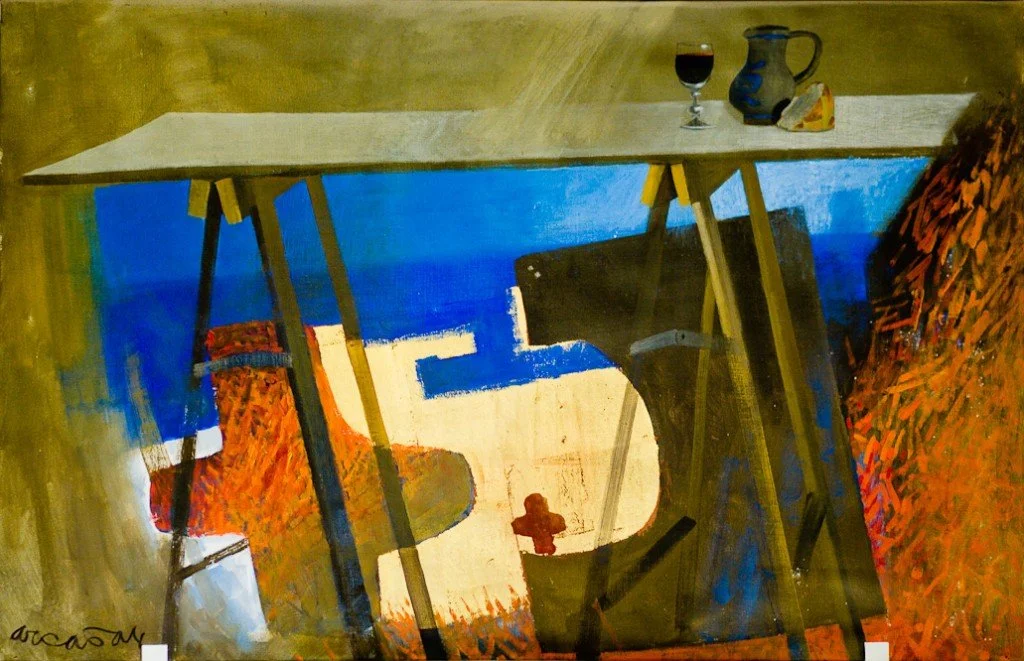
Arcabas
Communion
Anglicans take communion every week . . .
Yes, you heard me: every week. This is because we are a church that was founded during the Reformation, when traditional church practices were getting a scrubbing and some were even kicked out. But not communion. The high point of an Anglican church service is communion, when all that we have just heard and done climaxes in Jesus nourishing us for the week ahead. And although this is a sacred moment, it is also a joyful one in which we are thankful that God cares not just for our minds, but our hearts and bodies.
(Remember - when Jesus left earth, he didn't leave us with a book to read but with a meal).
While many people associate frequent communion with Catholic churches, it was actually the Reformers who insisted that it be celebrated weekly.
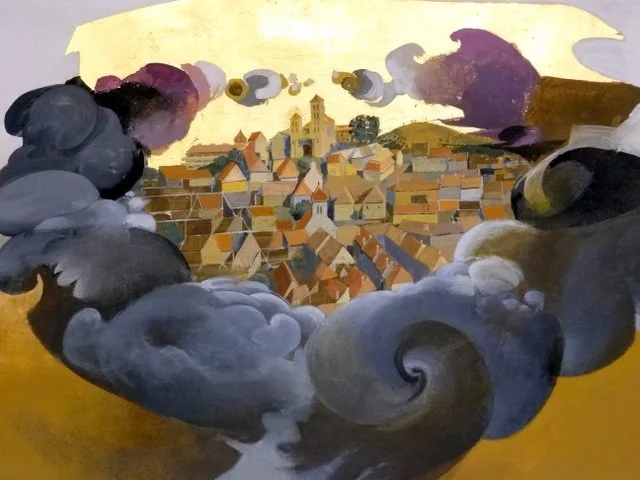
Arcabas
Anglicanism
We are part of a local network of churches in a grouping called a "diocese" - like a cohort of churches. We want to be a church where the pastors have accountability and support.
A "diocese" means that our pastors can be shepherded by another pastor, whose main job is to look after the pastors. (This shepherd's title is called a "bishop" - ours is Bishop Ken Ross at Rocky Mountain Diocese).
And we have hundreds of thousands of Anglican brothers and sisters around the world - America is small by comparison!